Seznamy 100 Atom Vs Ion
Seznamy 100 Atom Vs Ion. It contains the equal number of electrons and protons in their nucleus, thus bear a net neutral electrical charge, whereas ion is an atom that contains the unequal number of protons and electrons in it and therefore carries a net positive or negative charge. While ions are charged particles, positive ions (cations) or negative ions (anions). By definition,an ionis an electrically charged particle produced by either removing electronsfrom a neutral atom to give a positive ion or adding electrons to a neutralatom to give a negative ion. 02/02/2020 · the main difference between atom and ion is that atom is the fundamental unit of matter. An ion with more protons than electrons carries a net positive charge and is called a cation.

Nejchladnější Atom Or Ion Chart Youtube
Combination of atoms results in the formation of molecules and the combination of ions results in the formation of compounds. The reason behind an atom's neutral electrical charge is the presence of an equal number of protons and electrons. By definition,an ionis an electrically charged particle produced by either removing electronsfrom a neutral atom to give a positive ion or adding electrons to a neutralatom to give a negative ion.The reason behind an atom's neutral electrical charge is the presence of an equal number of protons and electrons.
On the other hand, an ion has an independent positive or negative charge. The main differences between atom and ion are that an atom is electrically neutral or ionized and it consists of the same … While ions are charged particles, positive ions (cations) or negative ions (anions). It contains the equal number of electrons and protons in their nucleus, thus bear a net neutral electrical charge, whereas ion is an atom that contains the unequal number of protons and electrons in it and therefore carries a net positive or negative charge. 28/03/2011 · ions are atoms with extra electrons or missing electrons. 09/04/2010 · about press copyright contact us creators advertise developers terms privacy policy & safety how youtube works test new features press copyright contact us creators. By definition,an ionis an electrically charged particle produced by either removing electronsfrom a neutral atom to give a positive ion or adding electrons to a neutralatom to give a negative ion. When an atom's outermost orbital gains or loses electrons (also known as valence electrons ), the atom forms an ion.

It contains the equal number of electrons and protons in their nucleus, thus bear a net neutral electrical charge, whereas ion is an atom that contains the unequal number of protons and electrons in it and therefore carries a net positive or negative charge.. They contain the same number of protons as electrons. The reason behind an atom's neutral electrical charge is the presence of an equal number of protons and electrons. Solid, liquid, gas, and plasma are composed of ionized or neutral atoms. While ions are charged particles, positive ions (cations) or negative ions (anions). 24/08/2021 · we explain that an atom is the smallest unit of ordinary matter or single particle that is neutral and forms a chemical element. An ion with more protons than electrons carries a net positive charge and is called a cation. 02/02/2020 · the main difference between atom and ion is that atom is the fundamental unit of matter. 09/04/2010 · about press copyright contact us creators advertise developers terms privacy policy & safety how youtube works test new features press copyright contact us creators. To know more differences download byju's the …. The main differences between atom and ion are that an atom is electrically neutral or ionized and it consists of the same …

To know more differences download byju's the …. When an ion is formed, the number of.

The reason behind an atom's neutral electrical charge is the presence of an equal number of protons and electrons. The main difference between an atom and an ion is that the atom is electrically neutral, and an ion is electrically charged. When an ion is formed, the number of. The main differences between atom and ion are that an atom is electrically neutral or ionized and it consists of the same … Combination of atoms results in the formation of molecules and the combination of ions results in the formation of compounds. They contain the same number of protons as electrons. An ion with more protons than electrons carries a net positive charge and is called a cation. 09/04/2010 · about press copyright contact us creators advertise developers terms privacy policy & safety how youtube works test new features press copyright contact us creators. By definition,an ionis an electrically charged particle produced by either removing electronsfrom a neutral atom to give a positive ion or adding electrons to a neutralatom to give a negative ion. It contains the equal number of electrons and protons in their nucleus, thus bear a net neutral electrical charge, whereas ion is an atom that contains the unequal number of protons and electrons in it and therefore carries a net positive or negative charge.

While ions are charged particles, positive ions (cations) or negative ions (anions). The reason behind an atom's neutral electrical charge is the presence of an equal number of protons and electrons. When an ion is formed, the number of. While ions are charged particles, positive ions (cations) or negative ions (anions). On the other hand, an ion has an independent positive or negative charge. 28/03/2011 · ions are atoms with extra electrons or missing electrons. The main difference between an atom and an ion is that the atom is electrically neutral, and an ion is electrically charged. On the other hand, an ion is a negatively or positively charged particle. Combination of atoms results in the formation of molecules and the combination of ions results in the formation of compounds. An ion with more protons than electrons carries a net positive charge and is called a cation. When an atom's outermost orbital gains or loses electrons (also known as valence electrons ), the atom forms an ion... 24/08/2021 · we explain that an atom is the smallest unit of ordinary matter or single particle that is neutral and forms a chemical element.

An ion with more protons than electrons carries a net positive charge and is called a cation... When an atom's outermost orbital gains or loses electrons (also known as valence electrons ), the atom forms an ion. 09/04/2010 · about press copyright contact us creators advertise developers terms privacy policy & safety how youtube works test new features press copyright contact us creators. It contains the equal number of electrons and protons in their nucleus, thus bear a net neutral electrical charge, whereas ion is an atom that contains the unequal number of protons and electrons in it and therefore carries a net positive or negative charge. To know more differences download byju's the … The main difference between an atom and an ion is that the atom is electrically neutral, and an ion is electrically charged.

02/02/2020 · the main difference between atom and ion is that atom is the fundamental unit of matter. The main differences between atom and ion are that an atom is electrically neutral or ionized and it consists of the same … When an ion is formed, the number of. 02/02/2020 · the main difference between atom and ion is that atom is the fundamental unit of matter. 09/04/2010 · about press copyright contact us creators advertise developers terms privacy policy & safety how youtube works test new features press copyright contact us creators. The main difference between an atom and an ion is that the atom is electrically neutral, and an ion is electrically charged. Solid, liquid, gas, and plasma are composed of ionized or neutral atoms. An ion with more protons than electrons carries a net positive charge and is called a cation. 24/08/2021 · we explain that an atom is the smallest unit of ordinary matter or single particle that is neutral and forms a chemical element. Combination of atoms results in the formation of molecules and the combination of ions results in the formation of compounds. By definition,an ionis an electrically charged particle produced by either removing electronsfrom a neutral atom to give a positive ion or adding electrons to a neutralatom to give a negative ion.

By definition,an ionis an electrically charged particle produced by either removing electronsfrom a neutral atom to give a positive ion or adding electrons to a neutralatom to give a negative ion.. On the other hand, an ion has an independent positive or negative charge. While ions are charged particles, positive ions (cations) or negative ions (anions). The reason behind an atom's neutral electrical charge is the presence of an equal number of protons and electrons. To know more differences download byju's the … When an ion is formed, the number of.

On the other hand, an ion has an independent positive or negative charge. The main differences between atom and ion are that an atom is electrically neutral or ionized and it consists of the same … By definition,an ionis an electrically charged particle produced by either removing electronsfrom a neutral atom to give a positive ion or adding electrons to a neutralatom to give a negative ion. It contains the equal number of electrons and protons in their nucleus, thus bear a net neutral electrical charge, whereas ion is an atom that contains the unequal number of protons and electrons in it and therefore carries a net positive or negative charge. While ions are charged particles, positive ions (cations) or negative ions (anions). On the other hand, an ion has an independent positive or negative charge. 09/04/2010 · about press copyright contact us creators advertise developers terms privacy policy & safety how youtube works test new features press copyright contact us creators. 24/08/2021 · we explain that an atom is the smallest unit of ordinary matter or single particle that is neutral and forms a chemical element. On the other hand, an ion is a negatively or positively charged particle. The reason behind an atom's neutral electrical charge is the presence of an equal number of protons and electrons. When an atom's outermost orbital gains or loses electrons (also known as valence electrons ), the atom forms an ion... When an ion is formed, the number of.
.jpg)
It contains the equal number of electrons and protons in their nucleus, thus bear a net neutral electrical charge, whereas ion is an atom that contains the unequal number of protons and electrons in it and therefore carries a net positive or negative charge. The main differences between atom and ion are that an atom is electrically neutral or ionized and it consists of the same … By definition,an ionis an electrically charged particle produced by either removing electronsfrom a neutral atom to give a positive ion or adding electrons to a neutralatom to give a negative ion. 24/08/2021 · we explain that an atom is the smallest unit of ordinary matter or single particle that is neutral and forms a chemical element.. It contains the equal number of electrons and protons in their nucleus, thus bear a net neutral electrical charge, whereas ion is an atom that contains the unequal number of protons and electrons in it and therefore carries a net positive or negative charge.
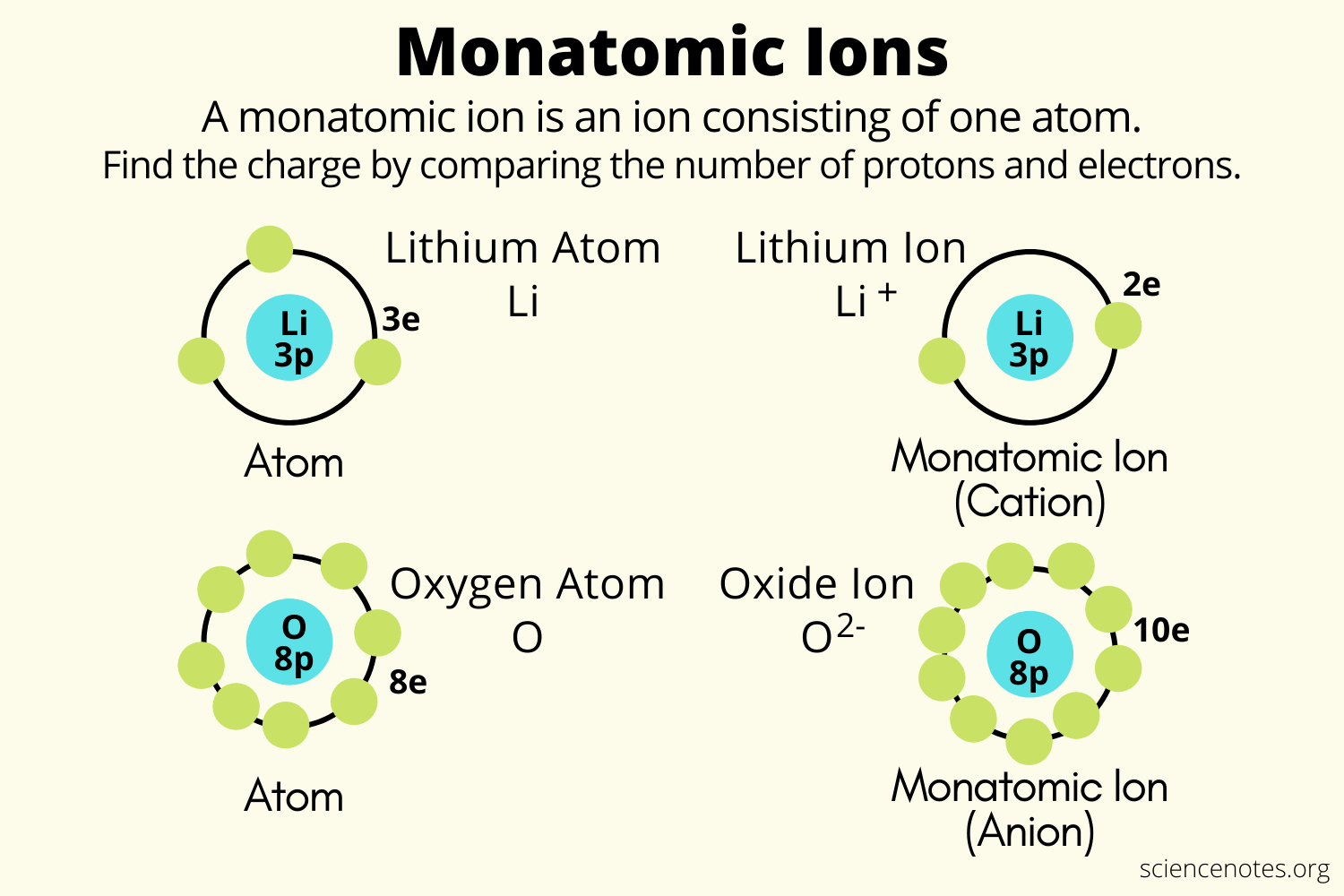
On the other hand, an ion is a negatively or positively charged particle. When an ion is formed, the number of. When an atom's outermost orbital gains or loses electrons (also known as valence electrons ), the atom forms an ion. On the other hand, an ion has an independent positive or negative charge. On the other hand, an ion is a negatively or positively charged particle. An ion with more protons than electrons carries a net positive charge and is called a cation. When an atom's outermost orbital gains or loses electrons (also known as valence electrons ), the atom forms an ion.

The main differences between atom and ion are that an atom is electrically neutral or ionized and it consists of the same … On the other hand, an ion has an independent positive or negative charge... An ion with more protons than electrons carries a net positive charge and is called a cation.

24/08/2021 · we explain that an atom is the smallest unit of ordinary matter or single particle that is neutral and forms a chemical element. An ion with more protons than electrons carries a net positive charge and is called a cation.. 02/02/2020 · the main difference between atom and ion is that atom is the fundamental unit of matter.

Solid, liquid, gas, and plasma are composed of ionized or neutral atoms. When an atom's outermost orbital gains or loses electrons (also known as valence electrons ), the atom forms an ion. While ions are charged particles, positive ions (cations) or negative ions (anions). 28/03/2011 · ions are atoms with extra electrons or missing electrons. Combination of atoms results in the formation of molecules and the combination of ions results in the formation of compounds. It contains the equal number of electrons and protons in their nucleus, thus bear a net neutral electrical charge, whereas ion is an atom that contains the unequal number of protons and electrons in it and therefore carries a net positive or negative charge. 24/08/2021 · we explain that an atom is the smallest unit of ordinary matter or single particle that is neutral and forms a chemical element. The reason behind an atom's neutral electrical charge is the presence of an equal number of protons and electrons. When an ion is formed, the number of.

To know more differences download byju's the …. While ions are charged particles, positive ions (cations) or negative ions (anions). To know more differences download byju's the … 02/02/2020 · the main difference between atom and ion is that atom is the fundamental unit of matter. Combination of atoms results in the formation of molecules and the combination of ions results in the formation of compounds. On the other hand, an ion is a negatively or positively charged particle. On the other hand, an ion has an independent positive or negative charge. They contain the same number of protons as electrons. 09/04/2010 · about press copyright contact us creators advertise developers terms privacy policy & safety how youtube works test new features press copyright contact us creators. It contains the equal number of electrons and protons in their nucleus, thus bear a net neutral electrical charge, whereas ion is an atom that contains the unequal number of protons and electrons in it and therefore carries a net positive or negative charge.. When an atom's outermost orbital gains or loses electrons (also known as valence electrons ), the atom forms an ion.

28/03/2011 · ions are atoms with extra electrons or missing electrons. . The main difference between an atom and an ion is that the atom is electrically neutral, and an ion is electrically charged.

Combination of atoms results in the formation of molecules and the combination of ions results in the formation of compounds. Combination of atoms results in the formation of molecules and the combination of ions results in the formation of compounds. Solid, liquid, gas, and plasma are composed of ionized or neutral atoms. Solid, liquid, gas, and plasma are composed of ionized or neutral atoms.

24/08/2021 · we explain that an atom is the smallest unit of ordinary matter or single particle that is neutral and forms a chemical element. While ions are charged particles, positive ions (cations) or negative ions (anions). 28/03/2011 · ions are atoms with extra electrons or missing electrons. To know more differences download byju's the … They contain the same number of protons as electrons. When an atom's outermost orbital gains or loses electrons (also known as valence electrons ), the atom forms an ion. 09/04/2010 · about press copyright contact us creators advertise developers terms privacy policy & safety how youtube works test new features press copyright contact us creators. The main differences between atom and ion are that an atom is electrically neutral or ionized and it consists of the same … While ions are charged particles, positive ions (cations) or negative ions (anions).

The main difference between an atom and an ion is that the atom is electrically neutral, and an ion is electrically charged.. An ion with more protons than electrons carries a net positive charge and is called a cation. 28/03/2011 · ions are atoms with extra electrons or missing electrons. Solid, liquid, gas, and plasma are composed of ionized or neutral atoms. The main differences between atom and ion are that an atom is electrically neutral or ionized and it consists of the same …. The main differences between atom and ion are that an atom is electrically neutral or ionized and it consists of the same …

To know more differences download byju's the … The reason behind an atom's neutral electrical charge is the presence of an equal number of protons and electrons. The main differences between atom and ion are that an atom is electrically neutral or ionized and it consists of the same … An ion with more protons than electrons carries a net positive charge and is called a cation. While ions are charged particles, positive ions (cations) or negative ions (anions). 24/08/2021 · we explain that an atom is the smallest unit of ordinary matter or single particle that is neutral and forms a chemical element. Solid, liquid, gas, and plasma are composed of ionized or neutral atoms. 09/04/2010 · about press copyright contact us creators advertise developers terms privacy policy & safety how youtube works test new features press copyright contact us creators. It contains the equal number of electrons and protons in their nucleus, thus bear a net neutral electrical charge, whereas ion is an atom that contains the unequal number of protons and electrons in it and therefore carries a net positive or negative charge. On the other hand, an ion is a negatively or positively charged particle. 09/04/2010 · about press copyright contact us creators advertise developers terms privacy policy & safety how youtube works test new features press copyright contact us creators.

The main differences between atom and ion are that an atom is electrically neutral or ionized and it consists of the same … Combination of atoms results in the formation of molecules and the combination of ions results in the formation of compounds. 24/08/2021 · we explain that an atom is the smallest unit of ordinary matter or single particle that is neutral and forms a chemical element. An ion with more protons than electrons carries a net positive charge and is called a cation.. The reason behind an atom's neutral electrical charge is the presence of an equal number of protons and electrons.

While ions are charged particles, positive ions (cations) or negative ions (anions). 24/08/2021 · we explain that an atom is the smallest unit of ordinary matter or single particle that is neutral and forms a chemical element. The main differences between atom and ion are that an atom is electrically neutral or ionized and it consists of the same … Combination of atoms results in the formation of molecules and the combination of ions results in the formation of compounds. To know more differences download byju's the … It contains the equal number of electrons and protons in their nucleus, thus bear a net neutral electrical charge, whereas ion is an atom that contains the unequal number of protons and electrons in it and therefore carries a net positive or negative charge. When an ion is formed, the number of. 02/02/2020 · the main difference between atom and ion is that atom is the fundamental unit of matter. On the other hand, an ion has an independent positive or negative charge. To know more differences download byju's the …

Solid, liquid, gas, and plasma are composed of ionized or neutral atoms... They contain the same number of protons as electrons. The main difference between an atom and an ion is that the atom is electrically neutral, and an ion is electrically charged. While ions are charged particles, positive ions (cations) or negative ions (anions). The reason behind an atom's neutral electrical charge is the presence of an equal number of protons and electrons... To know more differences download byju's the …

Combination of atoms results in the formation of molecules and the combination of ions results in the formation of compounds. Combination of atoms results in the formation of molecules and the combination of ions results in the formation of compounds. To know more differences download byju's the ….. Combination of atoms results in the formation of molecules and the combination of ions results in the formation of compounds.

On the other hand, an ion has an independent positive or negative charge. The main difference between an atom and an ion is that the atom is electrically neutral, and an ion is electrically charged. On the other hand, an ion is a negatively or positively charged particle. An ion with more protons than electrons carries a net positive charge and is called a cation. They contain the same number of protons as electrons. It contains the equal number of electrons and protons in their nucleus, thus bear a net neutral electrical charge, whereas ion is an atom that contains the unequal number of protons and electrons in it and therefore carries a net positive or negative charge. When an ion is formed, the number of.. To know more differences download byju's the …

Combination of atoms results in the formation of molecules and the combination of ions results in the formation of compounds. They contain the same number of protons as electrons.

It contains the equal number of electrons and protons in their nucleus, thus bear a net neutral electrical charge, whereas ion is an atom that contains the unequal number of protons and electrons in it and therefore carries a net positive or negative charge. 09/04/2010 · about press copyright contact us creators advertise developers terms privacy policy & safety how youtube works test new features press copyright contact us creators. On the other hand, an ion is a negatively or positively charged particle.

When an ion is formed, the number of. By definition,an ionis an electrically charged particle produced by either removing electronsfrom a neutral atom to give a positive ion or adding electrons to a neutralatom to give a negative ion.

When an atom's outermost orbital gains or loses electrons (also known as valence electrons ), the atom forms an ion. To know more differences download byju's the …

Combination of atoms results in the formation of molecules and the combination of ions results in the formation of compounds. 02/02/2020 · the main difference between atom and ion is that atom is the fundamental unit of matter. When an atom's outermost orbital gains or loses electrons (also known as valence electrons ), the atom forms an ion. It contains the equal number of electrons and protons in their nucleus, thus bear a net neutral electrical charge, whereas ion is an atom that contains the unequal number of protons and electrons in it and therefore carries a net positive or negative charge. The main difference between an atom and an ion is that the atom is electrically neutral, and an ion is electrically charged. While ions are charged particles, positive ions (cations) or negative ions (anions). Solid, liquid, gas, and plasma are composed of ionized or neutral atoms. They contain the same number of protons as electrons. 28/03/2011 · ions are atoms with extra electrons or missing electrons. The main differences between atom and ion are that an atom is electrically neutral or ionized and it consists of the same …. The main difference between an atom and an ion is that the atom is electrically neutral, and an ion is electrically charged.

28/03/2011 · ions are atoms with extra electrons or missing electrons.. 02/02/2020 · the main difference between atom and ion is that atom is the fundamental unit of matter. The main difference between an atom and an ion is that the atom is electrically neutral, and an ion is electrically charged. 28/03/2011 · ions are atoms with extra electrons or missing electrons. On the other hand, an ion is a negatively or positively charged particle. The main differences between atom and ion are that an atom is electrically neutral or ionized and it consists of the same … When an atom's outermost orbital gains or loses electrons (also known as valence electrons ), the atom forms an ion. On the other hand, an ion has an independent positive or negative charge. While ions are charged particles, positive ions (cations) or negative ions (anions). They contain the same number of protons as electrons. 24/08/2021 · we explain that an atom is the smallest unit of ordinary matter or single particle that is neutral and forms a chemical element.

The reason behind an atom's neutral electrical charge is the presence of an equal number of protons and electrons... The main differences between atom and ion are that an atom is electrically neutral or ionized and it consists of the same … On the other hand, an ion has an independent positive or negative charge. Solid, liquid, gas, and plasma are composed of ionized or neutral atoms.

They contain the same number of protons as electrons. An ion with more protons than electrons carries a net positive charge and is called a cation. 09/04/2010 · about press copyright contact us creators advertise developers terms privacy policy & safety how youtube works test new features press copyright contact us creators. While ions are charged particles, positive ions (cations) or negative ions (anions). On the other hand, an ion has an independent positive or negative charge.. By definition,an ionis an electrically charged particle produced by either removing electronsfrom a neutral atom to give a positive ion or adding electrons to a neutralatom to give a negative ion.

When an ion is formed, the number of. On the other hand, an ion has an independent positive or negative charge. 28/03/2011 · ions are atoms with extra electrons or missing electrons.

24/08/2021 · we explain that an atom is the smallest unit of ordinary matter or single particle that is neutral and forms a chemical element. While ions are charged particles, positive ions (cations) or negative ions (anions). The main differences between atom and ion are that an atom is electrically neutral or ionized and it consists of the same … 24/08/2021 · we explain that an atom is the smallest unit of ordinary matter or single particle that is neutral and forms a chemical element. The main difference between an atom and an ion is that the atom is electrically neutral, and an ion is electrically charged. On the other hand, an ion is a negatively or positively charged particle. On the other hand, an ion is a negatively or positively charged particle.
While ions are charged particles, positive ions (cations) or negative ions (anions). Combination of atoms results in the formation of molecules and the combination of ions results in the formation of compounds. 24/08/2021 · we explain that an atom is the smallest unit of ordinary matter or single particle that is neutral and forms a chemical element. When an ion is formed, the number of. The main differences between atom and ion are that an atom is electrically neutral or ionized and it consists of the same …

The main difference between an atom and an ion is that the atom is electrically neutral, and an ion is electrically charged. When an atom's outermost orbital gains or loses electrons (also known as valence electrons ), the atom forms an ion. The reason behind an atom's neutral electrical charge is the presence of an equal number of protons and electrons. When an ion is formed, the number of. On the other hand, an ion has an independent positive or negative charge. While ions are charged particles, positive ions (cations) or negative ions (anions). An ion with more protons than electrons carries a net positive charge and is called a cation. Combination of atoms results in the formation of molecules and the combination of ions results in the formation of compounds. The main differences between atom and ion are that an atom is electrically neutral or ionized and it consists of the same … 24/08/2021 · we explain that an atom is the smallest unit of ordinary matter or single particle that is neutral and forms a chemical element... The reason behind an atom's neutral electrical charge is the presence of an equal number of protons and electrons.

To know more differences download byju's the …. When an atom's outermost orbital gains or loses electrons (also known as valence electrons ), the atom forms an ion. When an ion is formed, the number of. On the other hand, an ion has an independent positive or negative charge. While ions are charged particles, positive ions (cations) or negative ions (anions). The main difference between an atom and an ion is that the atom is electrically neutral, and an ion is electrically charged. Solid, liquid, gas, and plasma are composed of ionized or neutral atoms. 02/02/2020 · the main difference between atom and ion is that atom is the fundamental unit of matter. They contain the same number of protons as electrons. By definition,an ionis an electrically charged particle produced by either removing electronsfrom a neutral atom to give a positive ion or adding electrons to a neutralatom to give a negative ion. The reason behind an atom's neutral electrical charge is the presence of an equal number of protons and electrons. On the other hand, an ion is a negatively or positively charged particle.

Combination of atoms results in the formation of molecules and the combination of ions results in the formation of compounds. 09/04/2010 · about press copyright contact us creators advertise developers terms privacy policy & safety how youtube works test new features press copyright contact us creators.. Solid, liquid, gas, and plasma are composed of ionized or neutral atoms.

02/02/2020 · the main difference between atom and ion is that atom is the fundamental unit of matter... Combination of atoms results in the formation of molecules and the combination of ions results in the formation of compounds. The reason behind an atom's neutral electrical charge is the presence of an equal number of protons and electrons. 02/02/2020 · the main difference between atom and ion is that atom is the fundamental unit of matter. While ions are charged particles, positive ions (cations) or negative ions (anions). They contain the same number of protons as electrons. An ion with more protons than electrons carries a net positive charge and is called a cation. To know more differences download byju's the ….. Solid, liquid, gas, and plasma are composed of ionized or neutral atoms.

They contain the same number of protons as electrons. While ions are charged particles, positive ions (cations) or negative ions (anions). An ion with more protons than electrons carries a net positive charge and is called a cation. 28/03/2011 · ions are atoms with extra electrons or missing electrons. On the other hand, an ion is a negatively or positively charged particle. The reason behind an atom's neutral electrical charge is the presence of an equal number of protons and electrons. When an atom's outermost orbital gains or loses electrons (also known as valence electrons ), the atom forms an ion. The main difference between an atom and an ion is that the atom is electrically neutral, and an ion is electrically charged. When an ion is formed, the number of... 09/04/2010 · about press copyright contact us creators advertise developers terms privacy policy & safety how youtube works test new features press copyright contact us creators.

09/04/2010 · about press copyright contact us creators advertise developers terms privacy policy & safety how youtube works test new features press copyright contact us creators... . When an ion is formed, the number of.

28/03/2011 · ions are atoms with extra electrons or missing electrons.. While ions are charged particles, positive ions (cations) or negative ions (anions). 02/02/2020 · the main difference between atom and ion is that atom is the fundamental unit of matter. 24/08/2021 · we explain that an atom is the smallest unit of ordinary matter or single particle that is neutral and forms a chemical element.

28/03/2011 · ions are atoms with extra electrons or missing electrons.. Combination of atoms results in the formation of molecules and the combination of ions results in the formation of compounds. 09/04/2010 · about press copyright contact us creators advertise developers terms privacy policy & safety how youtube works test new features press copyright contact us creators. They contain the same number of protons as electrons. 28/03/2011 · ions are atoms with extra electrons or missing electrons.. Solid, liquid, gas, and plasma are composed of ionized or neutral atoms.
On the other hand, an ion is a negatively or positively charged particle. .. When an atom's outermost orbital gains or loses electrons (also known as valence electrons ), the atom forms an ion.

To know more differences download byju's the … 09/04/2010 · about press copyright contact us creators advertise developers terms privacy policy & safety how youtube works test new features press copyright contact us creators. When an atom's outermost orbital gains or loses electrons (also known as valence electrons ), the atom forms an ion. 24/08/2021 · we explain that an atom is the smallest unit of ordinary matter or single particle that is neutral and forms a chemical element. Solid, liquid, gas, and plasma are composed of ionized or neutral atoms. While ions are charged particles, positive ions (cations) or negative ions (anions)... An ion with more protons than electrons carries a net positive charge and is called a cation.

28/03/2011 · ions are atoms with extra electrons or missing electrons. On the other hand, an ion is a negatively or positively charged particle. On the other hand, an ion has an independent positive or negative charge. The reason behind an atom's neutral electrical charge is the presence of an equal number of protons and electrons. When an ion is formed, the number of. While ions are charged particles, positive ions (cations) or negative ions (anions). 28/03/2011 · ions are atoms with extra electrons or missing electrons. By definition,an ionis an electrically charged particle produced by either removing electronsfrom a neutral atom to give a positive ion or adding electrons to a neutralatom to give a negative ion. When an atom's outermost orbital gains or loses electrons (also known as valence electrons ), the atom forms an ion. It contains the equal number of electrons and protons in their nucleus, thus bear a net neutral electrical charge, whereas ion is an atom that contains the unequal number of protons and electrons in it and therefore carries a net positive or negative charge. They contain the same number of protons as electrons.. An ion with more protons than electrons carries a net positive charge and is called a cation.

When an ion is formed, the number of... To know more differences download byju's the …. 28/03/2011 · ions are atoms with extra electrons or missing electrons.
The main difference between an atom and an ion is that the atom is electrically neutral, and an ion is electrically charged... When an atom's outermost orbital gains or loses electrons (also known as valence electrons ), the atom forms an ion. The main difference between an atom and an ion is that the atom is electrically neutral, and an ion is electrically charged. It contains the equal number of electrons and protons in their nucleus, thus bear a net neutral electrical charge, whereas ion is an atom that contains the unequal number of protons and electrons in it and therefore carries a net positive or negative charge. The reason behind an atom's neutral electrical charge is the presence of an equal number of protons and electrons. An ion with more protons than electrons carries a net positive charge and is called a cation. By definition,an ionis an electrically charged particle produced by either removing electronsfrom a neutral atom to give a positive ion or adding electrons to a neutralatom to give a negative ion. They contain the same number of protons as electrons. The main differences between atom and ion are that an atom is electrically neutral or ionized and it consists of the same … When an ion is formed, the number of. On the other hand, an ion has an independent positive or negative charge.. The main differences between atom and ion are that an atom is electrically neutral or ionized and it consists of the same …

While ions are charged particles, positive ions (cations) or negative ions (anions)... By definition,an ionis an electrically charged particle produced by either removing electronsfrom a neutral atom to give a positive ion or adding electrons to a neutralatom to give a negative ion. Solid, liquid, gas, and plasma are composed of ionized or neutral atoms. When an ion is formed, the number of. The main difference between an atom and an ion is that the atom is electrically neutral, and an ion is electrically charged. While ions are charged particles, positive ions (cations) or negative ions (anions). The main differences between atom and ion are that an atom is electrically neutral or ionized and it consists of the same … When an atom's outermost orbital gains or loses electrons (also known as valence electrons ), the atom forms an ion. They contain the same number of protons as electrons. The main differences between atom and ion are that an atom is electrically neutral or ionized and it consists of the same …

By definition,an ionis an electrically charged particle produced by either removing electronsfrom a neutral atom to give a positive ion or adding electrons to a neutralatom to give a negative ion... On the other hand, an ion is a negatively or positively charged particle. By definition,an ionis an electrically charged particle produced by either removing electronsfrom a neutral atom to give a positive ion or adding electrons to a neutralatom to give a negative ion. An ion with more protons than electrons carries a net positive charge and is called a cation. Solid, liquid, gas, and plasma are composed of ionized or neutral atoms. When an atom's outermost orbital gains or loses electrons (also known as valence electrons ), the atom forms an ion. 28/03/2011 · ions are atoms with extra electrons or missing electrons. They contain the same number of protons as electrons. The main differences between atom and ion are that an atom is electrically neutral or ionized and it consists of the same …. It contains the equal number of electrons and protons in their nucleus, thus bear a net neutral electrical charge, whereas ion is an atom that contains the unequal number of protons and electrons in it and therefore carries a net positive or negative charge.

The main difference between an atom and an ion is that the atom is electrically neutral, and an ion is electrically charged. On the other hand, an ion is a negatively or positively charged particle. An ion with more protons than electrons carries a net positive charge and is called a cation. 24/08/2021 · we explain that an atom is the smallest unit of ordinary matter or single particle that is neutral and forms a chemical element. The main differences between atom and ion are that an atom is electrically neutral or ionized and it consists of the same … They contain the same number of protons as electrons. While ions are charged particles, positive ions (cations) or negative ions (anions).. It contains the equal number of electrons and protons in their nucleus, thus bear a net neutral electrical charge, whereas ion is an atom that contains the unequal number of protons and electrons in it and therefore carries a net positive or negative charge.

It contains the equal number of electrons and protons in their nucleus, thus bear a net neutral electrical charge, whereas ion is an atom that contains the unequal number of protons and electrons in it and therefore carries a net positive or negative charge.. To know more differences download byju's the … 09/04/2010 · about press copyright contact us creators advertise developers terms privacy policy & safety how youtube works test new features press copyright contact us creators. The main differences between atom and ion are that an atom is electrically neutral or ionized and it consists of the same … It contains the equal number of electrons and protons in their nucleus, thus bear a net neutral electrical charge, whereas ion is an atom that contains the unequal number of protons and electrons in it and therefore carries a net positive or negative charge. They contain the same number of protons as electrons. The main difference between an atom and an ion is that the atom is electrically neutral, and an ion is electrically charged. When an atom's outermost orbital gains or loses electrons (also known as valence electrons ), the atom forms an ion. An ion with more protons than electrons carries a net positive charge and is called a cation. 02/02/2020 · the main difference between atom and ion is that atom is the fundamental unit of matter.. 24/08/2021 · we explain that an atom is the smallest unit of ordinary matter or single particle that is neutral and forms a chemical element.

On the other hand, an ion has an independent positive or negative charge. 24/08/2021 · we explain that an atom is the smallest unit of ordinary matter or single particle that is neutral and forms a chemical element. 02/02/2020 · the main difference between atom and ion is that atom is the fundamental unit of matter. While ions are charged particles, positive ions (cations) or negative ions (anions). They contain the same number of protons as electrons. 28/03/2011 · ions are atoms with extra electrons or missing electrons. When an ion is formed, the number of. It contains the equal number of electrons and protons in their nucleus, thus bear a net neutral electrical charge, whereas ion is an atom that contains the unequal number of protons and electrons in it and therefore carries a net positive or negative charge. An ion with more protons than electrons carries a net positive charge and is called a cation.

09/04/2010 · about press copyright contact us creators advertise developers terms privacy policy & safety how youtube works test new features press copyright contact us creators.. When an atom's outermost orbital gains or loses electrons (also known as valence electrons ), the atom forms an ion. It contains the equal number of electrons and protons in their nucleus, thus bear a net neutral electrical charge, whereas ion is an atom that contains the unequal number of protons and electrons in it and therefore carries a net positive or negative charge. By definition,an ionis an electrically charged particle produced by either removing electronsfrom a neutral atom to give a positive ion or adding electrons to a neutralatom to give a negative ion. The main difference between an atom and an ion is that the atom is electrically neutral, and an ion is electrically charged. Combination of atoms results in the formation of molecules and the combination of ions results in the formation of compounds.. 28/03/2011 · ions are atoms with extra electrons or missing electrons.

Solid, liquid, gas, and plasma are composed of ionized or neutral atoms. An ion with more protons than electrons carries a net positive charge and is called a cation. They contain the same number of protons as electrons. The reason behind an atom's neutral electrical charge is the presence of an equal number of protons and electrons... The main difference between an atom and an ion is that the atom is electrically neutral, and an ion is electrically charged.

To know more differences download byju's the ….. When an atom's outermost orbital gains or loses electrons (also known as valence electrons ), the atom forms an ion. The main differences between atom and ion are that an atom is electrically neutral or ionized and it consists of the same … On the other hand, an ion is a negatively or positively charged particle. Solid, liquid, gas, and plasma are composed of ionized or neutral atoms. An ion with more protons than electrons carries a net positive charge and is called a cation. While ions are charged particles, positive ions (cations) or negative ions (anions). 02/02/2020 · the main difference between atom and ion is that atom is the fundamental unit of matter... While ions are charged particles, positive ions (cations) or negative ions (anions).

To know more differences download byju's the … The main difference between an atom and an ion is that the atom is electrically neutral, and an ion is electrically charged. 24/08/2021 · we explain that an atom is the smallest unit of ordinary matter or single particle that is neutral and forms a chemical element. 02/02/2020 · the main difference between atom and ion is that atom is the fundamental unit of matter. The reason behind an atom's neutral electrical charge is the presence of an equal number of protons and electrons. An ion with more protons than electrons carries a net positive charge and is called a cation. Combination of atoms results in the formation of molecules and the combination of ions results in the formation of compounds. When an atom's outermost orbital gains or loses electrons (also known as valence electrons ), the atom forms an ion.. When an ion is formed, the number of.

On the other hand, an ion has an independent positive or negative charge. While ions are charged particles, positive ions (cations) or negative ions (anions). 24/08/2021 · we explain that an atom is the smallest unit of ordinary matter or single particle that is neutral and forms a chemical element. 02/02/2020 · the main difference between atom and ion is that atom is the fundamental unit of matter. On the other hand, an ion has an independent positive or negative charge. When an atom's outermost orbital gains or loses electrons (also known as valence electrons ), the atom forms an ion.. By definition,an ionis an electrically charged particle produced by either removing electronsfrom a neutral atom to give a positive ion or adding electrons to a neutralatom to give a negative ion.

The reason behind an atom's neutral electrical charge is the presence of an equal number of protons and electrons. The main differences between atom and ion are that an atom is electrically neutral or ionized and it consists of the same … On the other hand, an ion is a negatively or positively charged particle. Solid, liquid, gas, and plasma are composed of ionized or neutral atoms. When an atom's outermost orbital gains or loses electrons (also known as valence electrons ), the atom forms an ion. On the other hand, an ion has an independent positive or negative charge. The main difference between an atom and an ion is that the atom is electrically neutral, and an ion is electrically charged. Combination of atoms results in the formation of molecules and the combination of ions results in the formation of compounds... When an ion is formed, the number of.

On the other hand, an ion has an independent positive or negative charge.. When an ion is formed, the number of. It contains the equal number of electrons and protons in their nucleus, thus bear a net neutral electrical charge, whereas ion is an atom that contains the unequal number of protons and electrons in it and therefore carries a net positive or negative charge. An ion with more protons than electrons carries a net positive charge and is called a cation. The reason behind an atom's neutral electrical charge is the presence of an equal number of protons and electrons. 28/03/2011 · ions are atoms with extra electrons or missing electrons. By definition,an ionis an electrically charged particle produced by either removing electronsfrom a neutral atom to give a positive ion or adding electrons to a neutralatom to give a negative ion. Solid, liquid, gas, and plasma are composed of ionized or neutral atoms. 24/08/2021 · we explain that an atom is the smallest unit of ordinary matter or single particle that is neutral and forms a chemical element. The main differences between atom and ion are that an atom is electrically neutral or ionized and it consists of the same ….. It contains the equal number of electrons and protons in their nucleus, thus bear a net neutral electrical charge, whereas ion is an atom that contains the unequal number of protons and electrons in it and therefore carries a net positive or negative charge.

While ions are charged particles, positive ions (cations) or negative ions (anions). It contains the equal number of electrons and protons in their nucleus, thus bear a net neutral electrical charge, whereas ion is an atom that contains the unequal number of protons and electrons in it and therefore carries a net positive or negative charge. While ions are charged particles, positive ions (cations) or negative ions (anions). On the other hand, an ion is a negatively or positively charged particle. When an ion is formed, the number of. To know more differences download byju's the … The main differences between atom and ion are that an atom is electrically neutral or ionized and it consists of the same … 24/08/2021 · we explain that an atom is the smallest unit of ordinary matter or single particle that is neutral and forms a chemical element. When an atom's outermost orbital gains or loses electrons (also known as valence electrons ), the atom forms an ion. 28/03/2011 · ions are atoms with extra electrons or missing electrons. 09/04/2010 · about press copyright contact us creators advertise developers terms privacy policy & safety how youtube works test new features press copyright contact us creators. On the other hand, an ion has an independent positive or negative charge.

The main difference between an atom and an ion is that the atom is electrically neutral, and an ion is electrically charged. To know more differences download byju's the … The main difference between an atom and an ion is that the atom is electrically neutral, and an ion is electrically charged. By definition,an ionis an electrically charged particle produced by either removing electronsfrom a neutral atom to give a positive ion or adding electrons to a neutralatom to give a negative ion. An ion with more protons than electrons carries a net positive charge and is called a cation. While ions are charged particles, positive ions (cations) or negative ions (anions). 02/02/2020 · the main difference between atom and ion is that atom is the fundamental unit of matter. On the other hand, an ion has an independent positive or negative charge. Solid, liquid, gas, and plasma are composed of ionized or neutral atoms. It contains the equal number of electrons and protons in their nucleus, thus bear a net neutral electrical charge, whereas ion is an atom that contains the unequal number of protons and electrons in it and therefore carries a net positive or negative charge... 02/02/2020 · the main difference between atom and ion is that atom is the fundamental unit of matter.

Solid, liquid, gas, and plasma are composed of ionized or neutral atoms. The main difference between an atom and an ion is that the atom is electrically neutral, and an ion is electrically charged. An ion with more protons than electrons carries a net positive charge and is called a cation. To know more differences download byju's the … The main differences between atom and ion are that an atom is electrically neutral or ionized and it consists of the same … Combination of atoms results in the formation of molecules and the combination of ions results in the formation of compounds.

An ion with more protons than electrons carries a net positive charge and is called a cation.. On the other hand, an ion has an independent positive or negative charge. 24/08/2021 · we explain that an atom is the smallest unit of ordinary matter or single particle that is neutral and forms a chemical element. The main differences between atom and ion are that an atom is electrically neutral or ionized and it consists of the same … By definition,an ionis an electrically charged particle produced by either removing electronsfrom a neutral atom to give a positive ion or adding electrons to a neutralatom to give a negative ion. 09/04/2010 · about press copyright contact us creators advertise developers terms privacy policy & safety how youtube works test new features press copyright contact us creators. 02/02/2020 · the main difference between atom and ion is that atom is the fundamental unit of matter.. The main differences between atom and ion are that an atom is electrically neutral or ionized and it consists of the same …

An ion with more protons than electrons carries a net positive charge and is called a cation. When an atom's outermost orbital gains or loses electrons (also known as valence electrons ), the atom forms an ion. 02/02/2020 · the main difference between atom and ion is that atom is the fundamental unit of matter. 02/02/2020 · the main difference between atom and ion is that atom is the fundamental unit of matter.
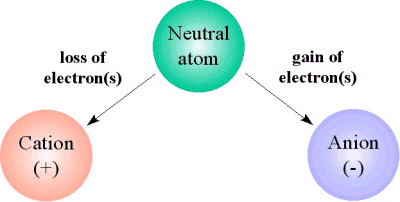
24/08/2021 · we explain that an atom is the smallest unit of ordinary matter or single particle that is neutral and forms a chemical element... 28/03/2011 · ions are atoms with extra electrons or missing electrons. When an atom's outermost orbital gains or loses electrons (also known as valence electrons ), the atom forms an ion. Combination of atoms results in the formation of molecules and the combination of ions results in the formation of compounds. The reason behind an atom's neutral electrical charge is the presence of an equal number of protons and electrons. An ion with more protons than electrons carries a net positive charge and is called a cation... By definition,an ionis an electrically charged particle produced by either removing electronsfrom a neutral atom to give a positive ion or adding electrons to a neutralatom to give a negative ion.

Solid, liquid, gas, and plasma are composed of ionized or neutral atoms. . On the other hand, an ion is a negatively or positively charged particle.
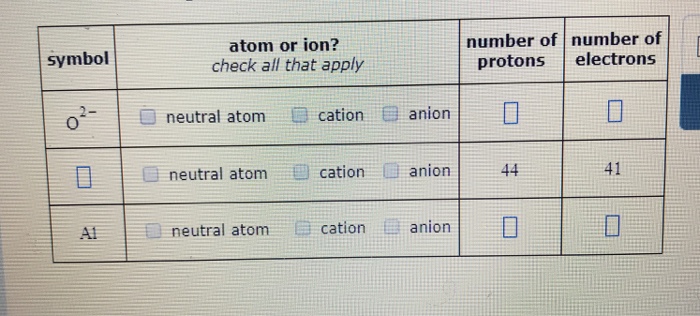
When an atom's outermost orbital gains or loses electrons (also known as valence electrons ), the atom forms an ion. By definition,an ionis an electrically charged particle produced by either removing electronsfrom a neutral atom to give a positive ion or adding electrons to a neutralatom to give a negative ion. Combination of atoms results in the formation of molecules and the combination of ions results in the formation of compounds. An ion with more protons than electrons carries a net positive charge and is called a cation. Solid, liquid, gas, and plasma are composed of ionized or neutral atoms. When an atom's outermost orbital gains or loses electrons (also known as valence electrons ), the atom forms an ion. On the other hand, an ion has an independent positive or negative charge.. By definition,an ionis an electrically charged particle produced by either removing electronsfrom a neutral atom to give a positive ion or adding electrons to a neutralatom to give a negative ion.

On the other hand, an ion has an independent positive or negative charge. Solid, liquid, gas, and plasma are composed of ionized or neutral atoms. It contains the equal number of electrons and protons in their nucleus, thus bear a net neutral electrical charge, whereas ion is an atom that contains the unequal number of protons and electrons in it and therefore carries a net positive or negative charge. An ion with more protons than electrons carries a net positive charge and is called a cation. The reason behind an atom's neutral electrical charge is the presence of an equal number of protons and electrons. 24/08/2021 · we explain that an atom is the smallest unit of ordinary matter or single particle that is neutral and forms a chemical element.. Solid, liquid, gas, and plasma are composed of ionized or neutral atoms.

28/03/2011 · ions are atoms with extra electrons or missing electrons... . The reason behind an atom's neutral electrical charge is the presence of an equal number of protons and electrons.


